The short answer
Bead blasting is one kind of media blasting. A fine media is sprayed at low pressure to knock calcium off pool tile without scrubbing it with acid. We check the type and condition of your tile first and choose the right technique for it. Every pool is different, so the price comes from a free estimate.
Being told your tile needs blasting can sound like something that will hurt it. Here is what media blasting really does, why your tile gets checked first, why it beats acid and scraping on hard scale, and what happens on the day.
How media blasting works
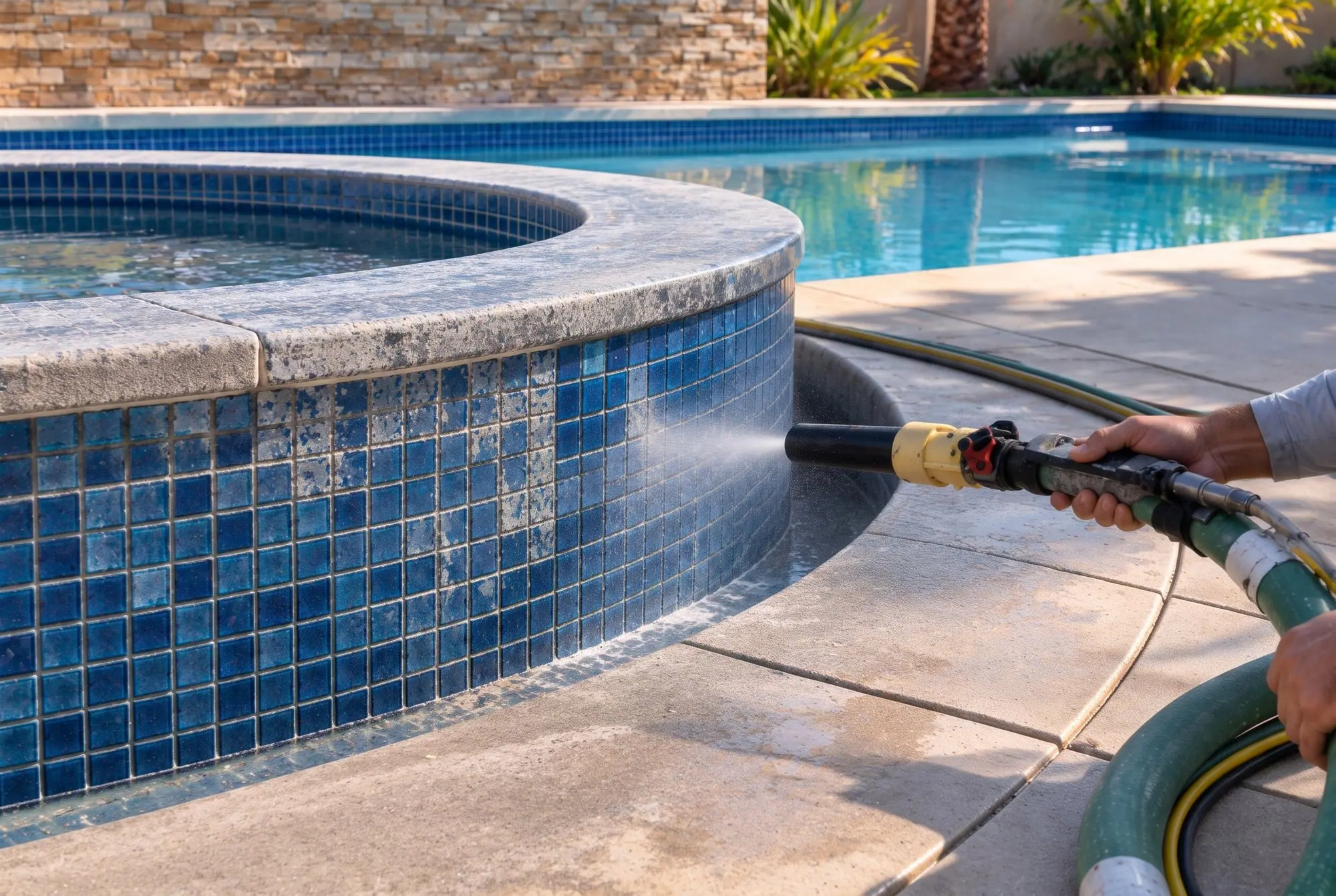
A compressor pushes a fine blasting media through a nozzle at low pressure, and the media chips the calcium off the face of the tile. ThePricer notes that light scale often responds to chemicals or pumice, while moderate to heavy scale usually needs media blasting at low pressure.
The point of it is control: the right media at the right pressure breaks up the calcium without cutting into the tile underneath. That is what lets thick, hard scale come off in hours instead of days of scraping, and it is why the color of the tile comes back instead of a dull, scratched surface.
Revive uses professional media-blasting equipment and looks at the type and condition of your tile before choosing how to clean it. For most pools the water only needs to come down about 6 inches below the tile, so there is no draining.
The right media for every surface
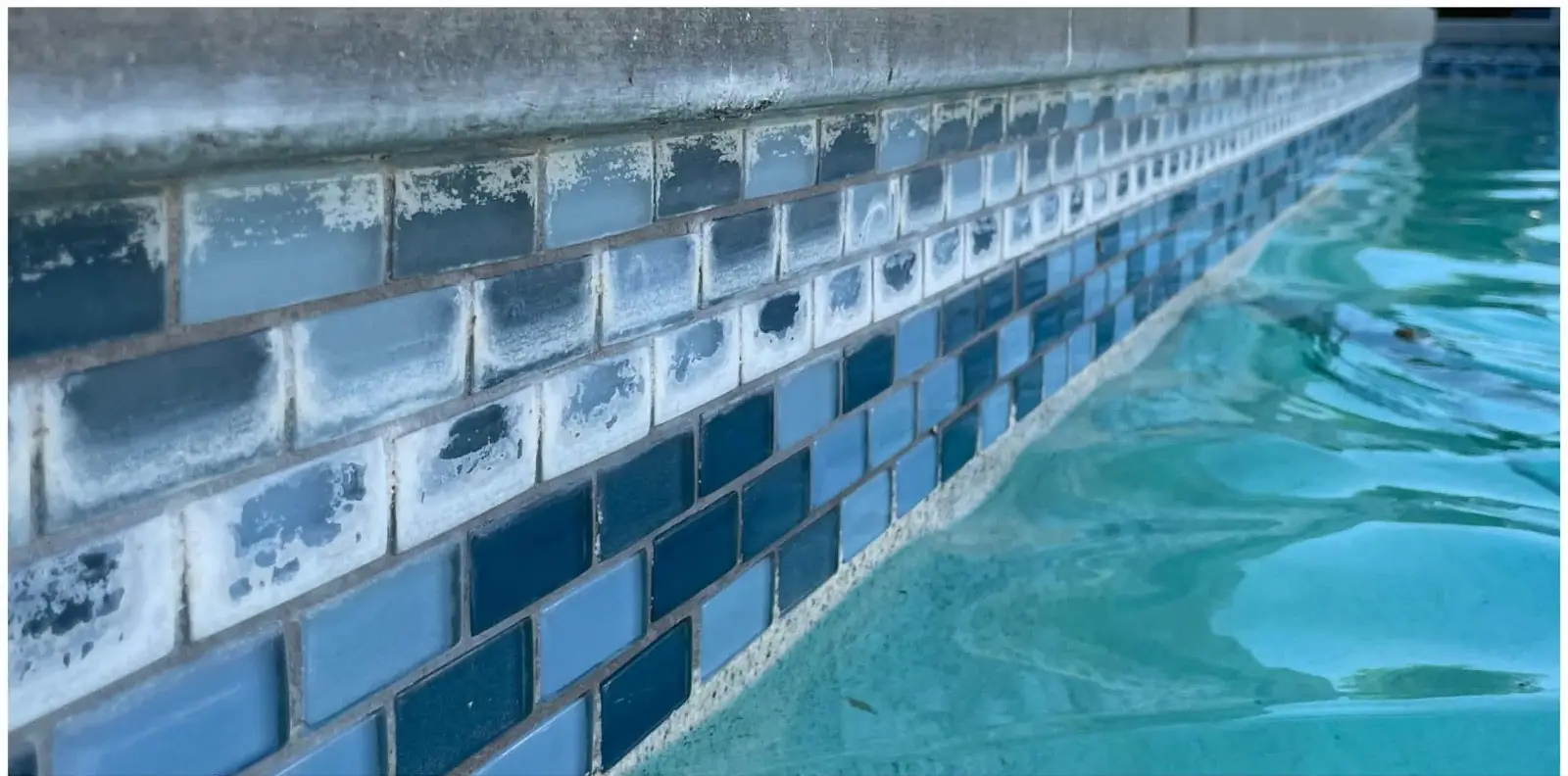
We don’t believe in a one-size-fits-all approach to pool tile cleaning. Calcium scale can build up on many different surfaces, from delicate glass mosaics to rugged natural rock, and using the wrong blasting material can permanently scratch, pit or ruin your investment.
That’s why we evaluate your pool’s specific materials and select the exact, specialized blasting media required for a safe, flawless clean. The method is part of the estimate, so you know what is being used on your pool before the work starts.
You don’t need to know anything about blasting to book. Send a close-up photo of the tile line and a wide shot of the pool, tell us if any tiles are loose or cracked, and we’ll tell you what the pool needs.
Why not just use acid or a pumice stone
Light, soft scale often comes off with a descaling chemical or a pumice stone, per ThePricer. Thick or hard scale is a different story. Poolonomics explains that calcium silicate doesn’t react to acid at all, and that silicate usually takes a professional to remove.
Hand methods carry their own risks. Pool Research says a pumice stone must be kept wet, or it can leave permanent scratches, and should never be used on a soft liner. Lunada Bay Tile, a glass and ceramic tile maker, says never to put muriatic acid directly on glass or ceramic tile. Orenda, a pool chemical maker, says it doesn’t recommend putting acid directly on scale either.
Blue Science, a pool service company, sketches a familiar scene: two days of muriatic acid, a pumice stone and a wire brush before a weekend party, and about 60 percent of the calcium gone. Its point is that those tools help with some calcium but aren’t the best way to remove it.
Is blasting safe for my tile and rock?
Done correctly, media blasting removes calcium from suitable pool tile without damaging it. The words that matter are “done correctly”: the right media for the surface, at the right pressure, by someone who looked at the tile first.
That is why the tile gets looked at before anything else. We check the type and condition of your tile, and the media is chosen for it. If any tiles are loose or cracked, or the grout is failing, mention it before the work starts, so those spots get the care they need.
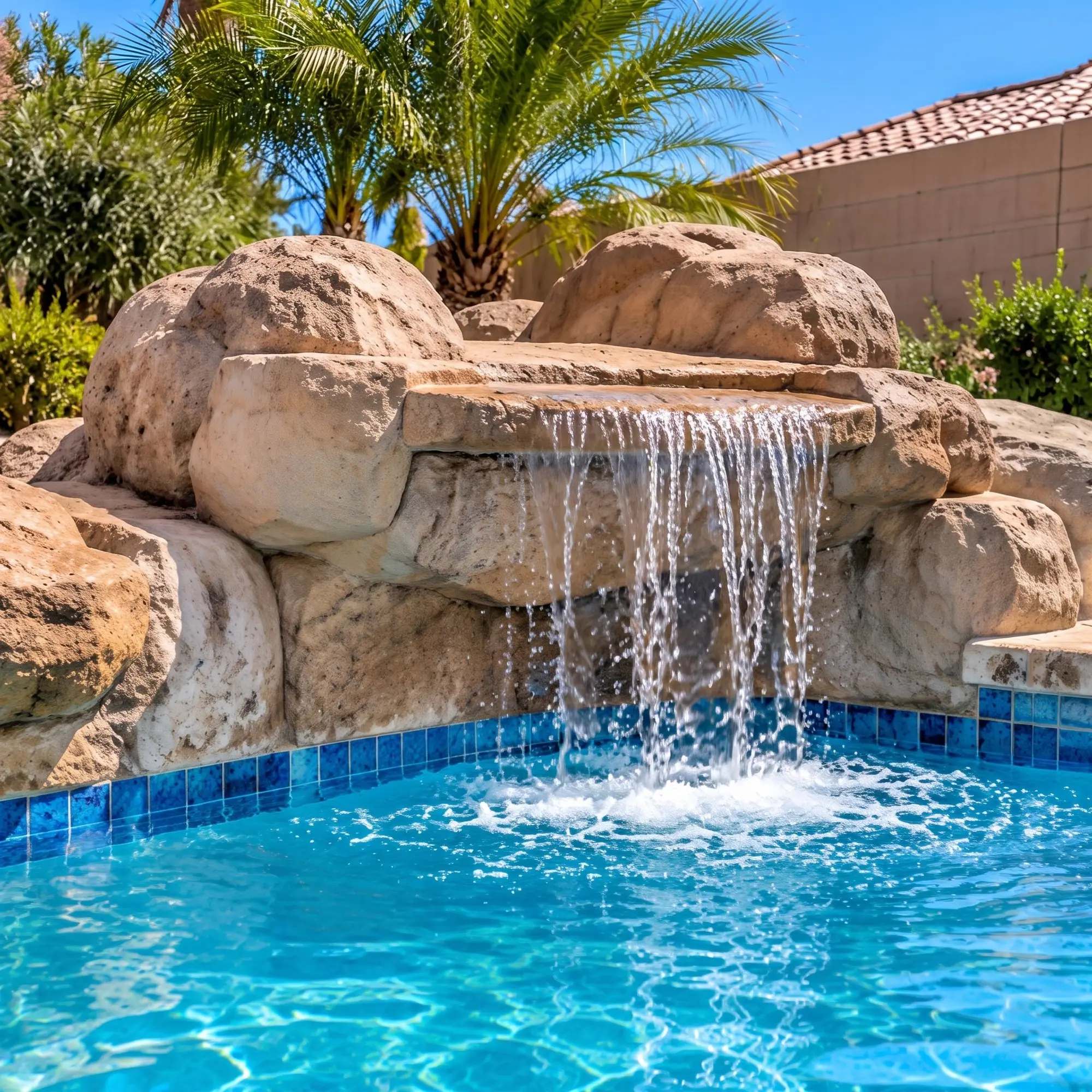
The same calcium that lines the tile streaks rock waterfalls, grottos, sheer descents and fountains, wherever water runs and dries. Orenda notes that scale forms on any surface the water touches, so a waterfall that looks white is usually carrying the same deposit as the tile below it. A grotto has more surface, more angles and more places for spent media to collect, so it takes more time than the tile line.
We clean suitable rock, grottos and water features with a gentler approach on softer stone, and doing them on the same visit as the tile saves a second setup. See rock and grotto cleaning and fountain cleaning for photos of that work.
What happens on the day
For most pools the water only has to come down about 6 inches below the tile, so there is no draining. ThePricer lists what a typical job includes: protecting the area, lowering the water line, blasting, cleaning up, and a basic check of the water chemistry afterward.
Before the blasting starts, the deck is masked and plants are covered, since the media and the calcium coming off the tile have to land somewhere. Tight decks, raised walls, spas and water features add time, because there is more to protect and more edges to work around. After the tile is clean, we rinse and vacuum away all the debris.
Most home pools are done in a few hours, depending on the size of the pool and how heavy the calcium is. We take pride in cleaning up after ourselves, so the deck and the area around the pool are left the way we found them, with clean tile.
How long the results last
Blasting removes the calcium that is there. It doesn’t change the water that put it there. ThePricer notes that scale comes back faster with high pH, high alkalinity, high calcium and a lot of evaporation, which describes many pools in the High Desert and the Inland Empire. Orenda makes the same point: grinding or bead blasting clears a tile line, but the scale usually comes back unless the water balance is fixed.
Pooldial suggests a tile cleaning every 2 to 3 years with good pH control and moderate calcium, and every year when calcium is high (400 ppm and up) and the pH runs high. Latham Pool says pH can have a bigger effect on calcium scaling than the calcium level does, so keeping the pH in range is the easiest way to stretch the time between cleanings.
A cover, balanced water and a weekly brush at the waterline all slow it down. This post explains why pools in Apple Valley build calcium so fast and what helps. When it does come back, it comes off the same way.
Questions to ask before you book
Two companies can both say “blasting” and mean different work. A few questions make them easy to compare:
- What media will you use on my tile, and why?
- Is lowering the water, cleaning up and checking the water chemistry part of the job?
- Is the spa or any raised tile included?
- How will the deck and plants be protected?
- What happens if you find loose or cracked tile?
A company that names the media, explains the choice and says what is and isn’t included is easier to compare, and less likely to surprise you on the day.
At Revive, every estimate is free and every pool is looked at before it is priced. We blast pool tile from Apple Valley to Redlands, Fontana and Rancho Cucamonga, and clean rock waterfalls and grottos on the same visit. Call or text (760) 885-4462, or see pool tile cleaning and rock and grotto cleaning.
Questions people ask
Will bead blasting damage my tile?
Done correctly, media blasting removes calcium from suitable pool tile without damaging it. We check the type and condition of your tile before cleaning and choose the right technique for it.
Do you have to drain the pool?
No. For most pools the water only needs to come down about 6 inches below the tile.
Can rock waterfalls and stone be blasted too?
Suitable rock, grottos and water features can be cleaned, with a gentler approach on softer stone. See our rock and grotto cleaning page.
Does the blasting media stay in the pool?
No. We rinse and vacuum away all the debris as part of the job.