The short answer
Every pool is different, so an acid wash is priced on the pool in front of us. The price depends on the size and shape of the pool, how bad the stains or algae are, the finish and how easy the pool is to get to. Ask what a quote includes, such as the drain, the refill and balancing the water.
Stained, dull or green plaster usually leads to the same question: is an acid wash worth it, and what will it cost? Every pool is different, so here is what goes into the price, what to ask before comparing quotes, how long the job takes and why it isn’t something to do every year.
What sets the price of an acid wash
An acid wash covers the whole inside of the pool, walls and floor together, which is a lot more surface than the pool’s footprint. So the size and shape of the pool come first. Steps, benches, slopes and a deep end all add surface, which is why two pools with the same length and width can take different amounts of time. Angi recommends having a professional measure the pool, since shallow and deep ends make the math harder.
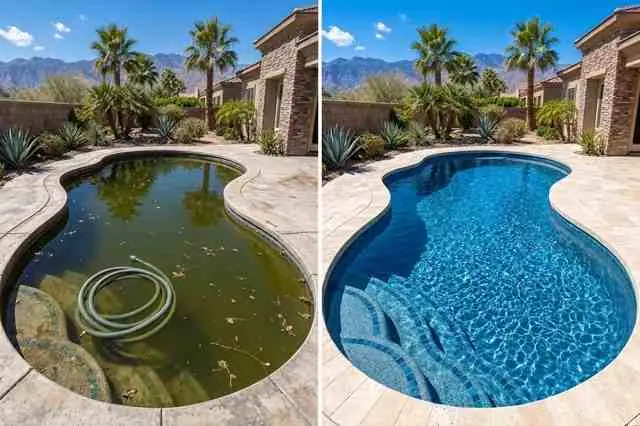
Then comes the condition of the plaster. Light, even staining comes off with less work than heavy staining, algae that has set into the surface or years of calcium. A pool that has gone green and stayed green long enough to stain the plaster takes more time and more care than one that is just dull.
Access matters too: how close the truck can get, where the water can be pumped and how much needs protecting around the pool. At Revive, every pool is different, and you get the price after we see it, on a free estimate or from a few photos, with no hidden surprises.
What to ask before comparing quotes
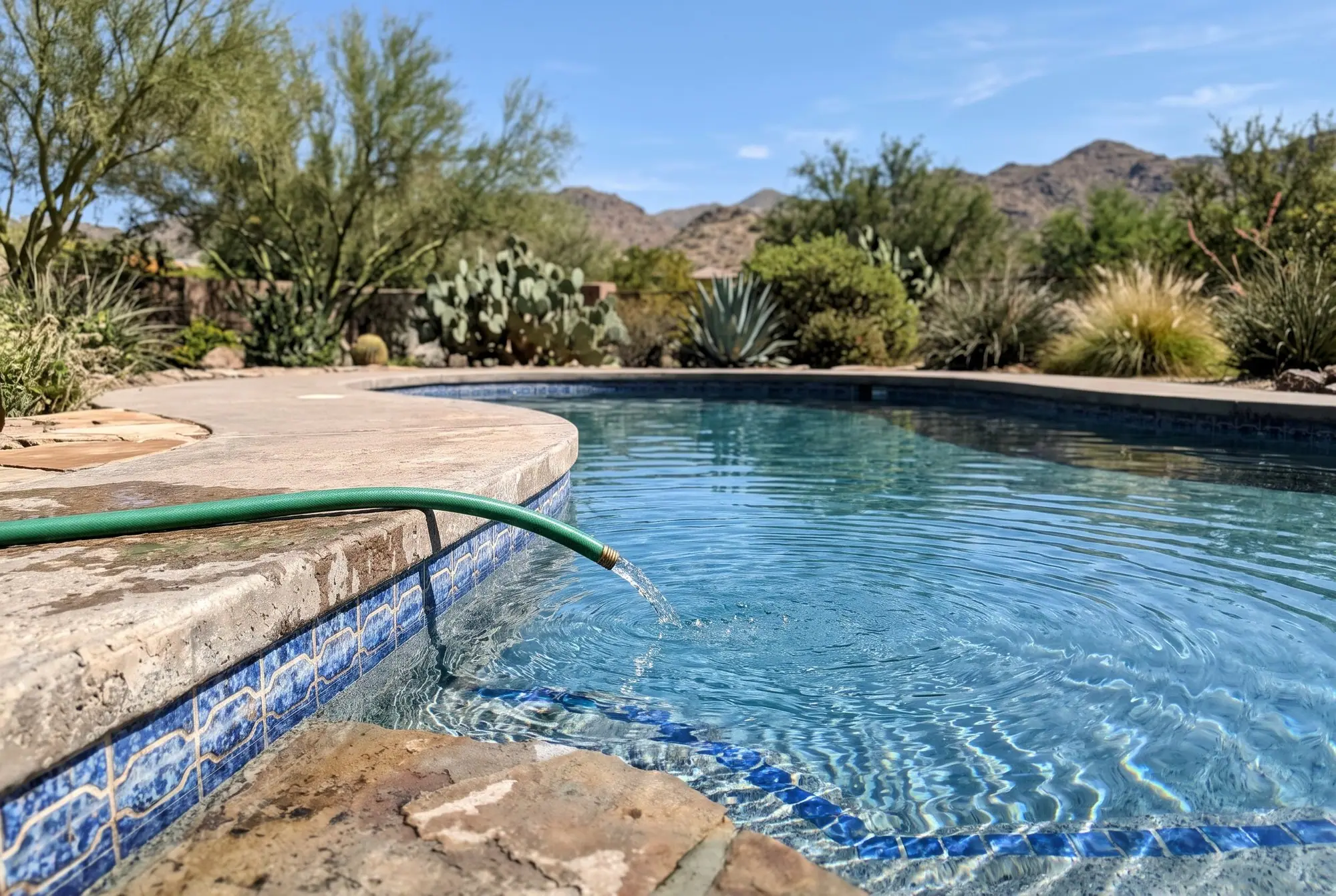
The wash itself is only part of the job. HomeGuide lists the services that are either included in a package or charged separately: draining the pool, refilling it, water delivery instead of a garden hose, and balancing the water chemistry after the refill.
So ask what a quote includes before comparing two of them: the drain, the wash, the neutralizing of the rinse water, the refill and the first round of chemicals. Two quotes that look far apart are often covering different work. Ask too how the pool will be refilled and how long that takes, since the pool can’t be used until it is full and the water is balanced.
In the High Desert, keep in mind that the refill water brings its own minerals with it: Liberty Utilities’ report puts Apple Valley’s tap water at 97 mg/L hardness on average. Here is why that matters, and how to keep the new finish from scaling up again.
When a pool needs an acid wash
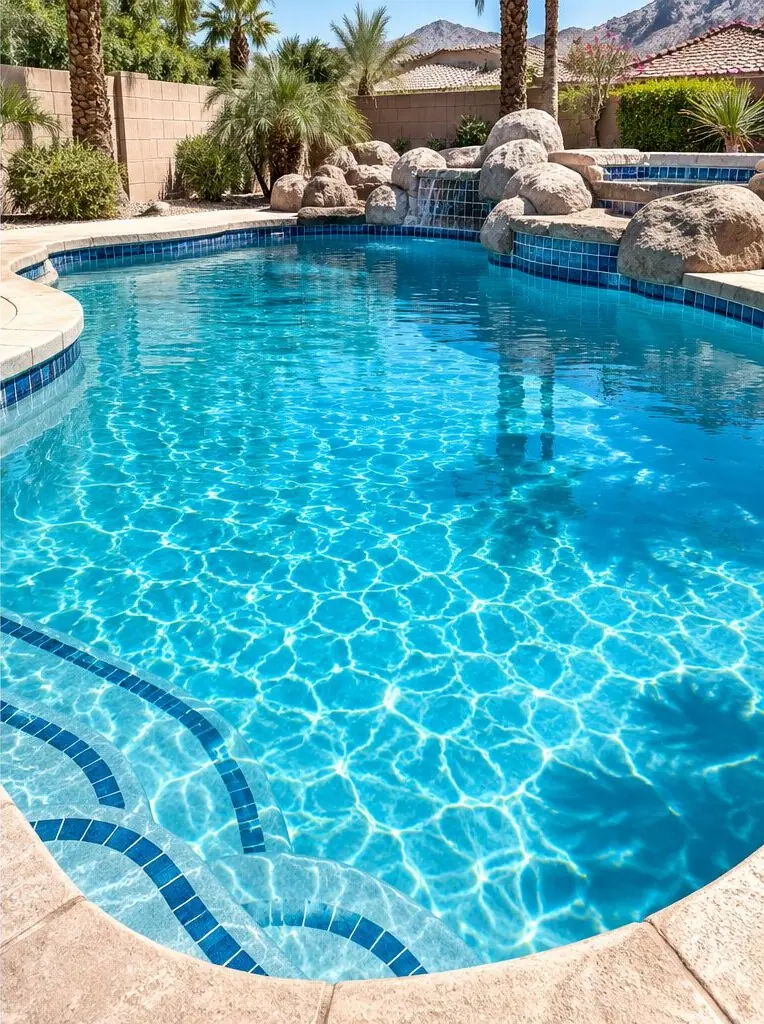
If your plaster is stained, discolored or has algae set into the surface that brushing can’t remove, an acid wash may be necessary. It gives the pool a fresh start and brings the brightness back to the finish.
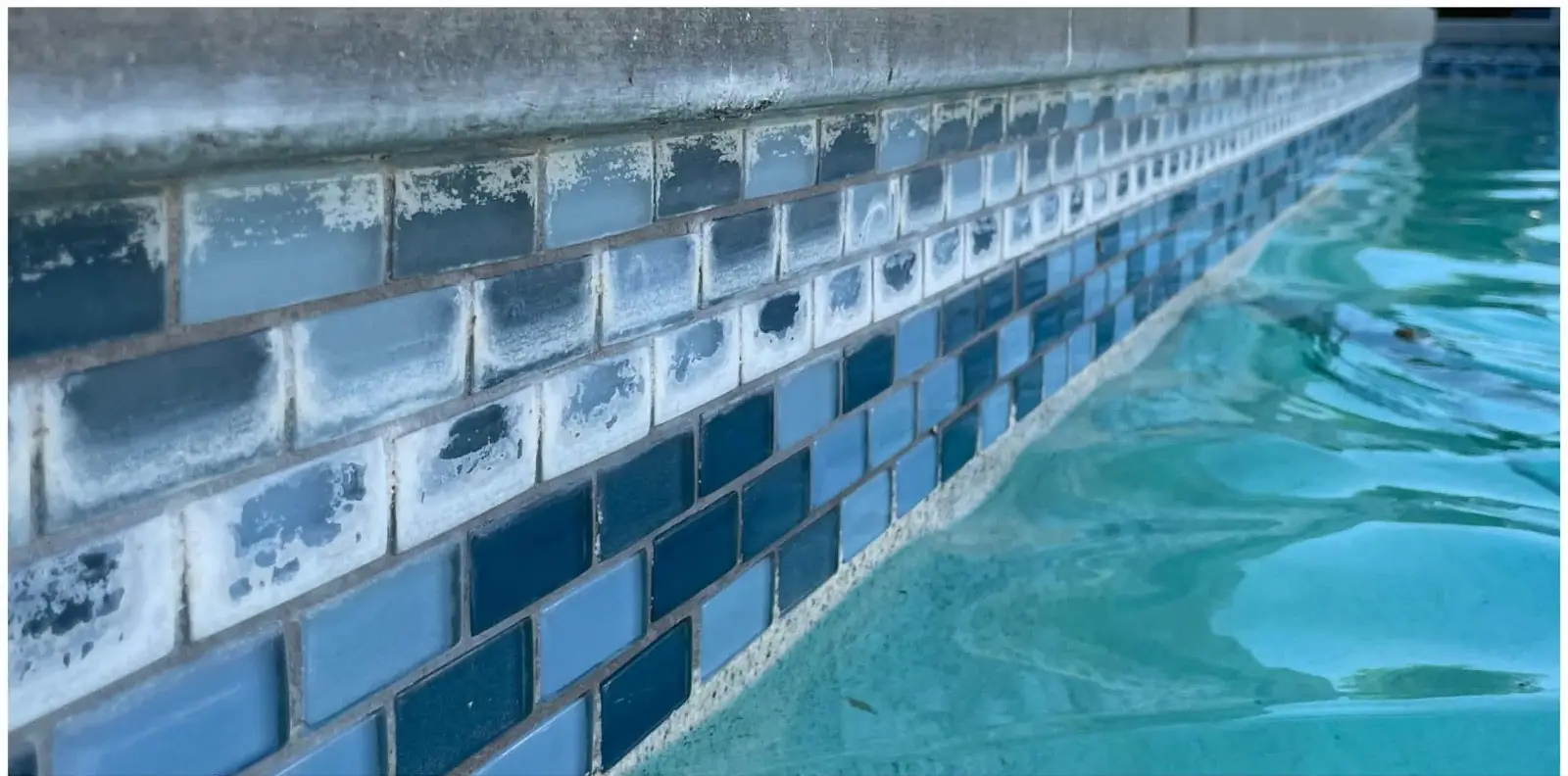
HomeGuide says a professional acid wash can bring back about 70 to 80 percent of a pool’s original brightness, and that it removes calcium scaling, metal stains and algae residue that regular cleaning can’t. Angi lists calcium, magnesium, mold and algae as what it targets, and notes that metal and mineral stains from iron, nickel and calcium take a lot more scrubbing than algae does. A pool that has gone green and stayed green long enough to stain the plaster is a common case.
Stains don’t always mean the plaster has to be stripped. ThePricer, citing the National Plasterers Council, notes that stains can come from dissolved metals, mineral imbalance, organic growth or plaster that is breaking down, and that each one needs a different fix. Some come out with a gentler treatment. That is why the pool should be looked at before anyone recommends a wash. Angi suggests asking your pro to judge how bad the stains are before scheduling, so the time and the price are right from the start.
Why it isn’t done often
An acid wash works by taking a very thin layer off the plaster, and the stains go with it. That is also its limit: each wash removes a little more of the finish. HomeGuide notes that some pool professionals suggest every 3 to 7 years depending on the pool’s condition, and that most well-kept pools only need it every other time the pool is drained and refilled.
ThePricer is blunter: an acid wash shouldn’t be scheduled just because a pool has been in use for several years. It doesn’t restore lost plaster thickness, fix structural cracks or correct failing waterproofing, so a finish that is worn through needs replastering instead.
Done badly, it can leave streaks, blotches or a rougher surface. Orenda, a pool chemical maker, shows a pure white band left by undiluted acid poured around the edge of a pool. HomeGuide warns that bad work leaves streaks that can’t be corrected and small pits where algae can grow. Pooldial mentions a no-drain version done with the water partly down, and says it is less effective and only suits light staining.
Once the finish is clean, water balance keeps it that way. The National Plasterers Council warns that water with low calcium, low pH or low alkalinity etches plaster over time, and it recommends testing pH, alkalinity and chlorine once or twice a week.
Draining safely, and why it isn’t a do-it-yourself job
Draining a pool carries its own risk. HomeGuide warns that groundwater pressure under an empty pool can push a concrete pool up out of the ground, which can mean a total loss, and suggests asking any company whether it carries insurance for that. ThePricer says the same: improper draining can cause structural damage where the groundwater conditions are wrong.
The acid is the other risk. The CDC counted an estimated 13,508 emergency room visits from pool chemical injuries in 2015 to 2017, at least 56.3 percent of them at a home, many from breathing fumes while opening containers. Product labels list which chemicals can’t be mixed, chlorine and acid among them. HomeGuide and Angi both advise homeowners not to acid wash a plaster pool themselves.
The rinse water has to go somewhere legal, too. Pooldial’s summary of California’s rules says pool water can’t go into storm drains, that most local agencies want chlorine at 0.1 ppm or less and the pH between 6.5 and 8.5 before it is let out, and that the local wastewater agency should be called before a big drain. Pooldial’s acid wash guide says all rinse water should be neutralized before it is pumped out, and adds that some areas require a contractor’s license for drain-and-clean work, so it is worth checking the rules where you live.
Which pools can be acid washed
An acid wash is a treatment for cement-based finishes like plaster. Revive offers draining and acid washing for suitable plaster pools. Vinyl liners and fiberglass pools are a different surface, so ask before anyone puts acid on them.
Angi says muriatic acid washing suits plaster, concrete, pebble and other aggregate finishes, and that fiberglass and vinyl pools need a much gentler ascorbic acid cleaner instead. ThePricer adds that a plaster-stripping process can damage vinyl and fiberglass. Angi notes that cleaning those pools with ascorbic acid is a job owners can reasonably do themselves.
Pebble and other aggregate finishes are cement-based too, but HomeGuide warns that acid can dissolve the cement between the pebbles and leave a rougher surface that holds dirt. Ask about your finish specifically before booking.
If you aren’t sure what your pool is finished with, a close-up photo of the wall and floor usually tells us. We’ll look at it before recommending anything.
How long it takes, and doing the tile on the same visit
Pooldial breaks the job into three parts: 8 to 12 hours to drain, often overnight, 4 to 6 hours for one person to wash, and another 8 to 12 hours to refill, about two days from start to swimming. Most pros, it says, drain the night before and wash the next morning.
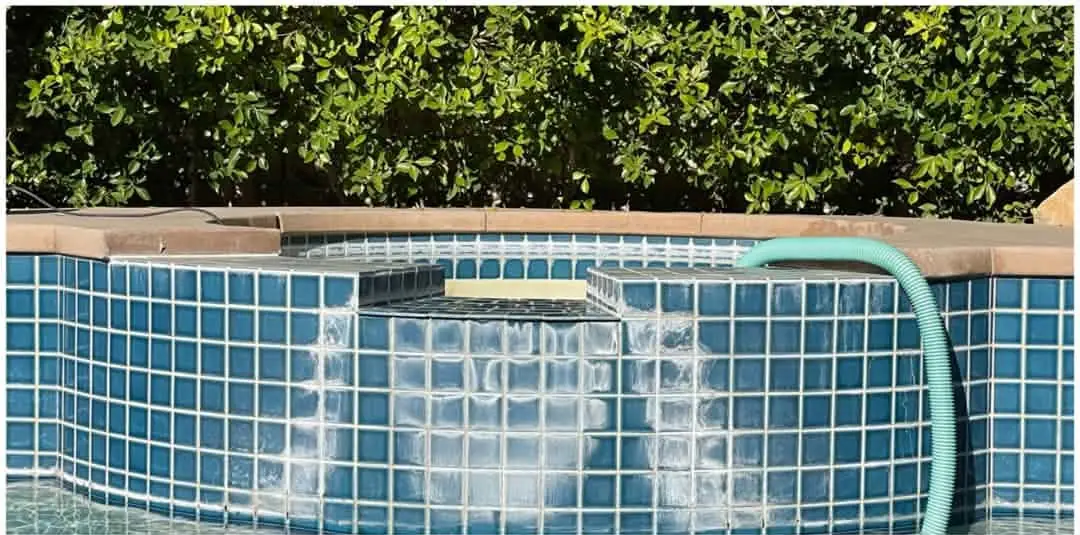
With the pool empty, the whole tile line is easy to reach, so it is a good time to have the calcium taken off the tile too. It also saves a second visit later, with the water already down and the deck already protected. Ask about combining tile cleaning and acid washing on the same visit, and about our same-day tile cleaning and acid wash options.
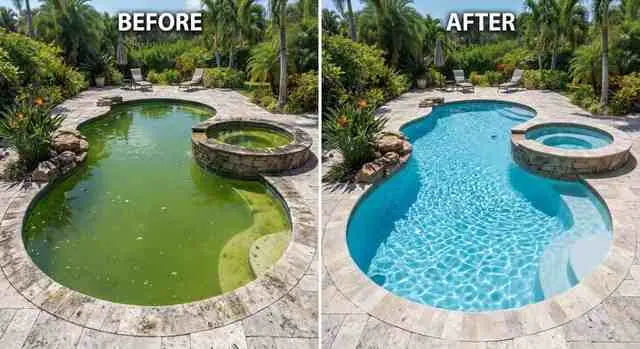
Tell us the date you need the pool back, and we’ll plan around it. Call or text (760) 885-4462 for a free estimate, or see the acid wash page for more of our green-to-blue jobs and the pool tile cleaning page. We drain and acid wash plaster pools across the High Desert and the Inland Empire, including Victorville, Hesperia and San Bernardino.
Questions people ask
Can a pool be acid washed without draining it?
A full acid wash means draining the pool. Pooldial describes a no-drain version with the water partly down, and says it is less effective and only suits light staining.
Can I acid wash my own pool?
HomeGuide and Angi both advise against it, because muriatic acid is dangerous to handle and mistakes can damage the pool for good.
Does an acid wash clean the tile too?
It is a treatment for the plaster. Calcium on the tile is usually removed separately, and both can be done on the same visit.
How long until we can swim again?
Pooldial puts the whole job at about two days from start to swimming, mostly draining and refilling.