The short answer
It depends on the pool. Every pool is different, so pool tile cleaning is priced pool by pool, not from a price list. The price depends on how much calcium has built up, how many linear feet of tile there are, how easy the pool is to get to and how hard the job is. Estimates are free, with no hidden surprises.
Calcium on the waterline is the most common reason a pool looks older than it is, and the first question is usually what it costs to take off. Every pool is different, so this guide explains what goes into the price, how to measure your tile line and how to get a real price for your pool.
Why there’s no one price for pool tile cleaning
Price lists for pool tile cleaning are easy to find online, but a list can’t see your pool. Two pools on the same street can need very different work. One has a thin, chalky line that was caught early. The other has years of hard, gray scale layered on glass tile around a raised spa. One flat number can’t be right for both.
At Revive, every pool is priced on what is actually there. Pricing depends on the amount of calcium buildup, the size of your pool, the tile’s condition and how easy it is to get to. We look at all of it on a free estimate, or from a few photos, and give you the price before any work starts, with straightforward pricing and no hidden surprises.
The rest of this guide goes through each of those things, so you know what we look at and why one pool takes longer than another.
How much calcium has built up
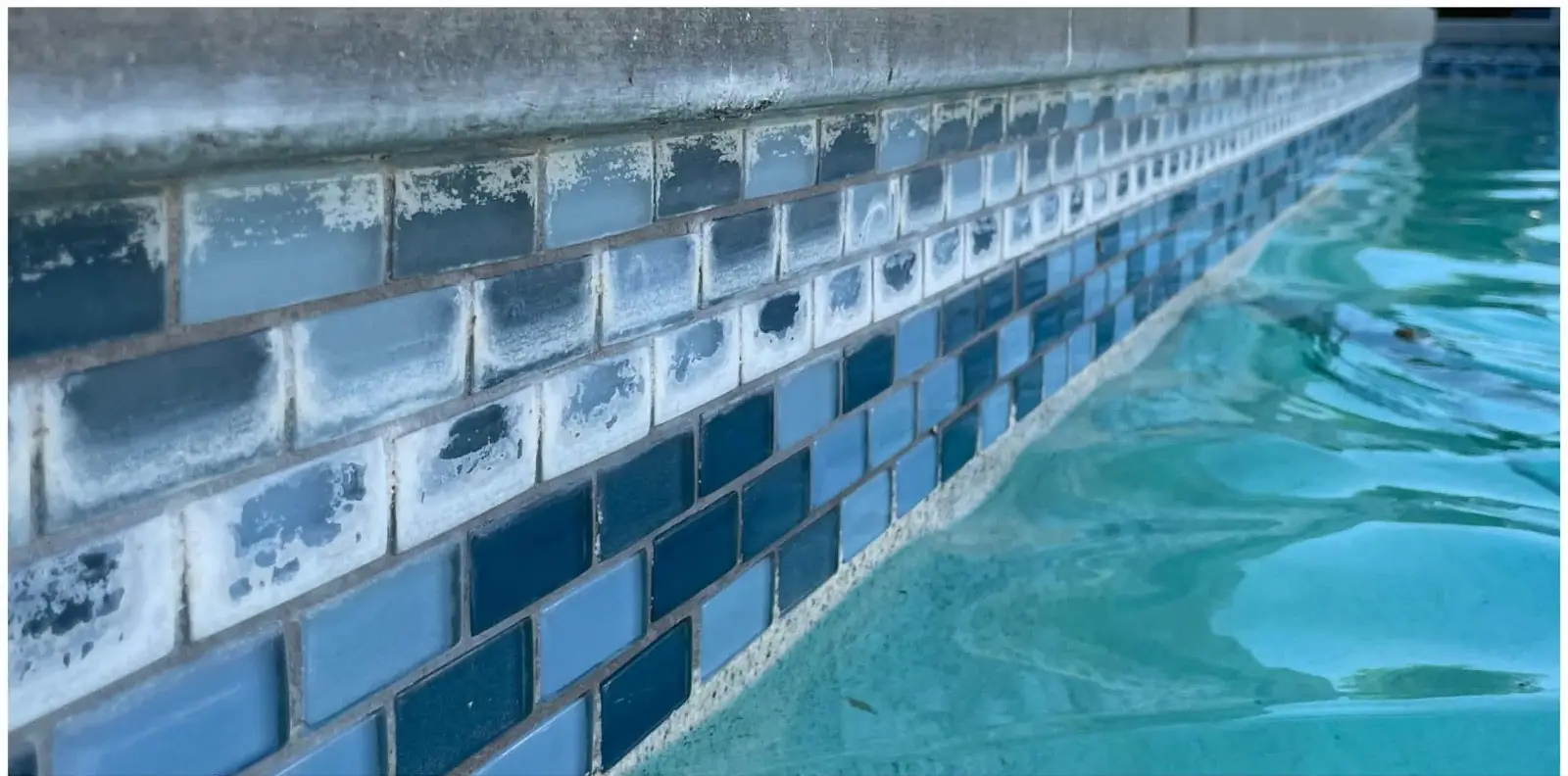
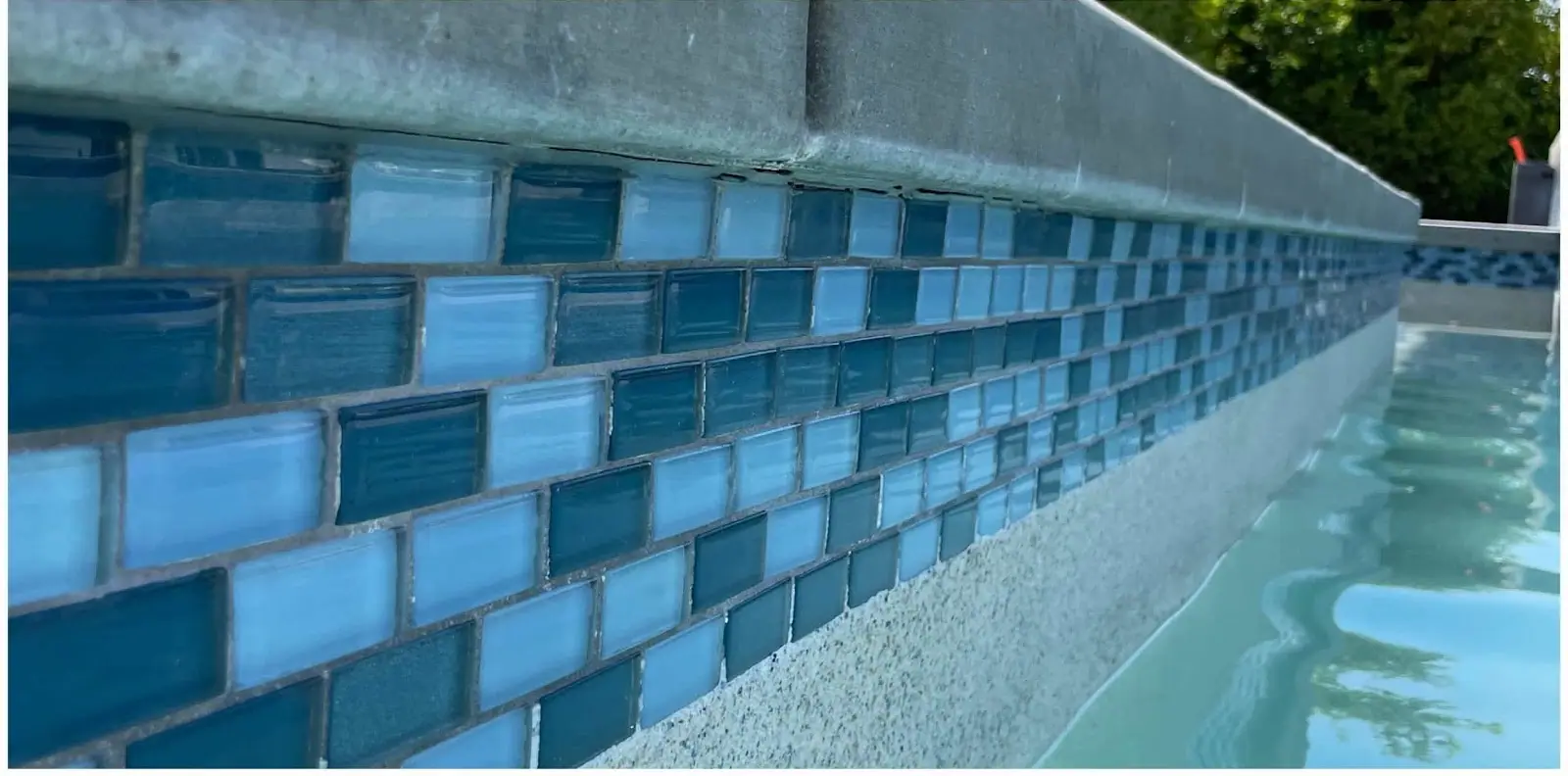
The calcium is the biggest part of the job. A light white line that gets cleaned every couple of years comes off quickly. A crust that has been building for years takes longer, and sometimes more than one pass. In the High Desert, where pools lose a lot of water to evaporation and every top-off brings in more minerals, the line grows fast, so the same pool can be a quick job one year and a longer one a few years later.
What the scale is made of matters as much as how thick it is. Latham Pool says calcium carbonate is white and flaky and fairly easy to take off, while calcium silicate is white-gray and harder to move. Pool Research adds that silicate builds more slowly, and that a big silicate problem usually needs a professional. A pool can have both. Here is how to tell them apart.
If the tile has never been cleaned, or you just bought the house and don’t know its history, tell us. A close-up photo of the tile line shows how thick the buildup is before anyone comes out.
How many linear feet of tile your pool has
Pool tile cleaning is measured along the waterline, so the length of tile around the pool is part of every price. For a rectangle, add the four sides: a 16 by 32 foot pool has 96 feet of waterline tile, and a 20 by 40 foot pool has 120. A freeform pool is usually longer around than its length and width suggest, so a tape measure along the edge, or the original pool plans if you have them, gives a better number than a guess.
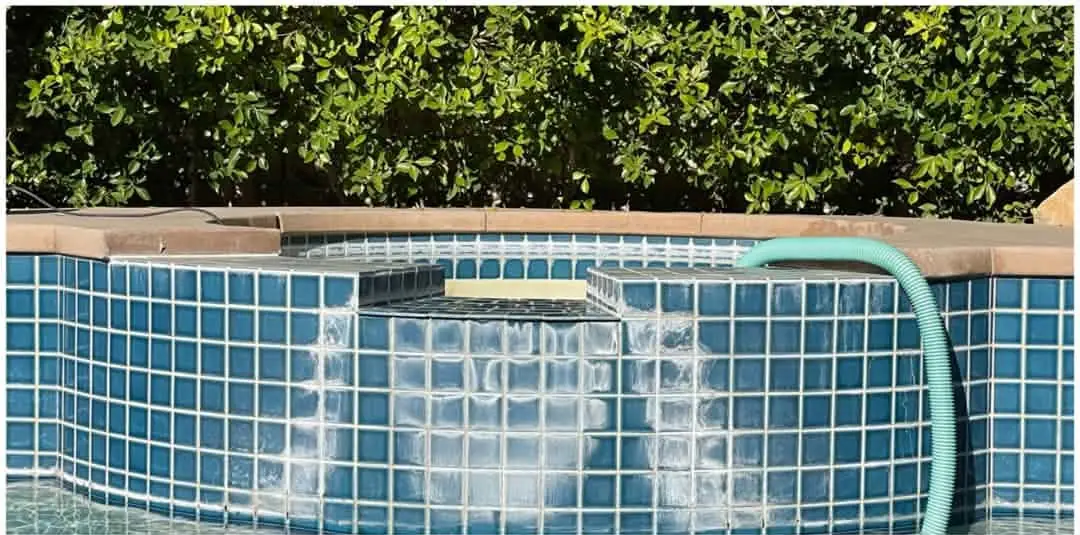
A spa adds its own ring of tile. A round spa 8 feet across has about 25 feet of tile around it, so a 16 by 32 foot pool with that spa comes to roughly 121 feet. A raised spa wall, a tiled step or a sheer water feature adds tile above the waterline, and that tile usually carries more calcium, because water runs over it and dries.
When you ask for a price, mention the spa, any raised walls and any water features, and say whether the tile is glass, porcelain or stone. Those details change how long the job takes, so a price that leaves them out is likely to change on the day.
Your tile gets checked first
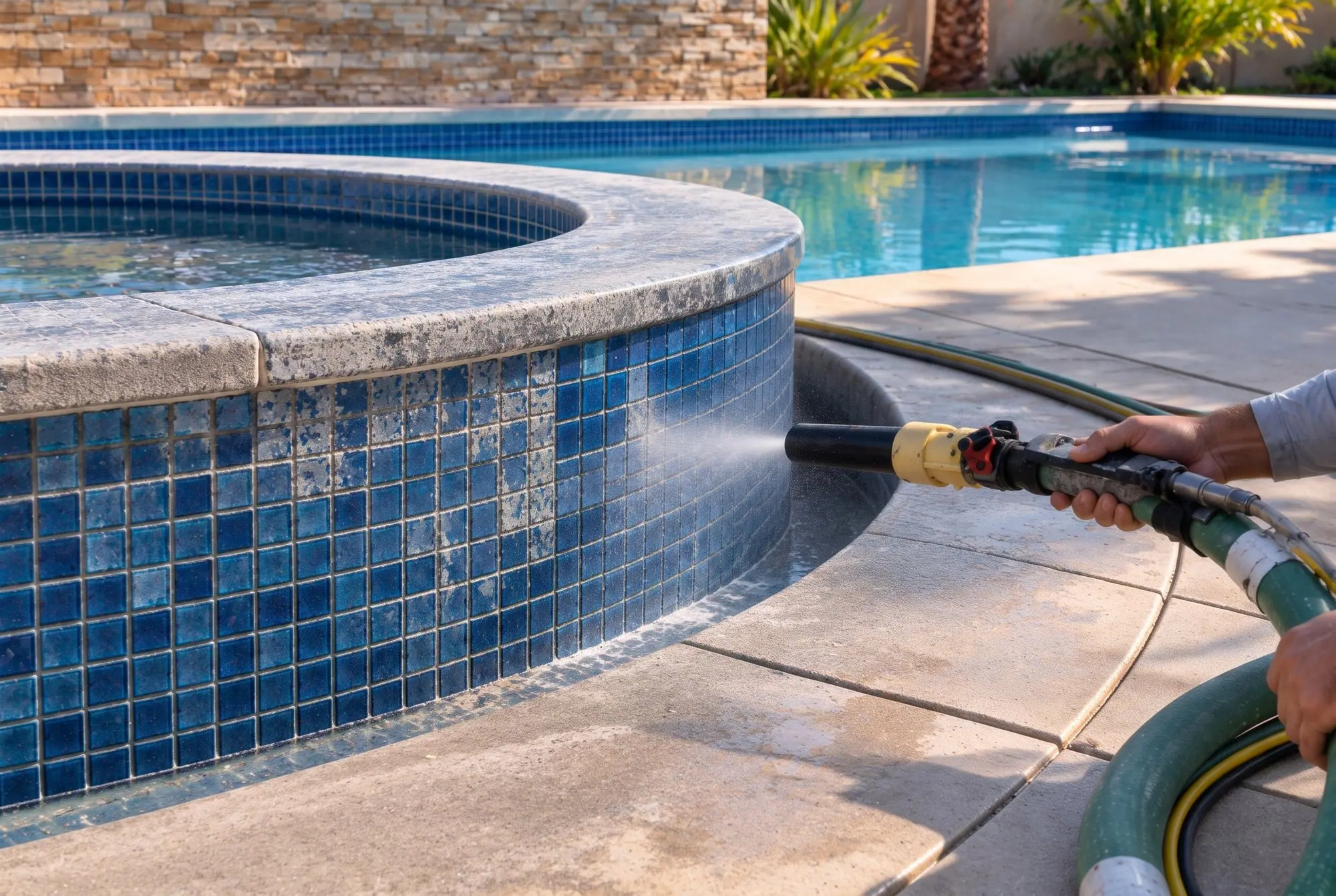
We don’t believe in a one-size-fits-all approach to pool tile cleaning. Calcium scale can build up on many different surfaces, from delicate glass mosaics to rugged natural rock, and using the wrong blasting material can permanently scratch, pit or ruin your investment.
That’s why we evaluate your pool’s specific materials and select the exact, specialized blasting media required for a safe, flawless clean. If any tiles are loose or cracked, or the grout is coming out, tell us, so those spots get the care they need and nothing changes on the day.
Doing it yourself carries its own risk. Pool Research says a pumice stone has to be kept wet or it can leave permanent scratches, and Lunada Bay Tile, a glass and ceramic tile maker, says never to put muriatic acid directly on glass or ceramic tile. How bead blasting works explains what happens on the day.
Access and how hard the job is
The last part of the price is the work around the tile. Before any calcium comes off, the area around the pool gets protected and the water comes down about 6 inches below the tile. A wide, open deck makes that quick. A tight deck, plants close to the edge, a narrow side yard or a long walk from the truck to the pool all add time.
Some tile is simply harder to work on. These push a job up:
- Tile on spas, raised walls and water features, which takes more masking and more care.
- Glass or delicate tile that needs a gentler media.
- Years of buildup, layered so thick that it takes more than one pass.
- Hard calcium silicate instead of soft, flaky carbonate.
What brings a price down is the opposite: a simple rectangle, light scale that was caught early, good access and nothing above the waterline. Booking the tile with other work on the same visit, such as a rock waterfall, a fountain or an acid wash, means the area only gets set up once.
Cleaning the tile vs replacing it
Why spend thousands replacing tile when you may be able to REVIVE it? Tile that looks ruined is often just covered in calcium. HomeGuide’s advice is that if the tile is dirty but otherwise in good shape, a professional cleaning beats replacing it.
Cleaning makes sense when the tile underneath is sound: no cracks, no loose or missing pieces, and no hollow spots when you tap it. Replacement makes sense when tiles are broken or falling off, or when the grout behind them has failed. A few loose tiles don’t always mean the whole band has to go, so ask about resetting those before anyone talks about a full retile.
It also helps to know what an acid wash is and isn’t for. ThePricer’s acid wash guide points out that when the calcium sits mostly along the tile line, tile cleaning may be a better fit than treating the whole plaster surface. If you aren’t sure which you need, a free estimate will tell you. Our motto is the short version: don’t replace it, REVIVE it.
How to keep the next cleaning easier
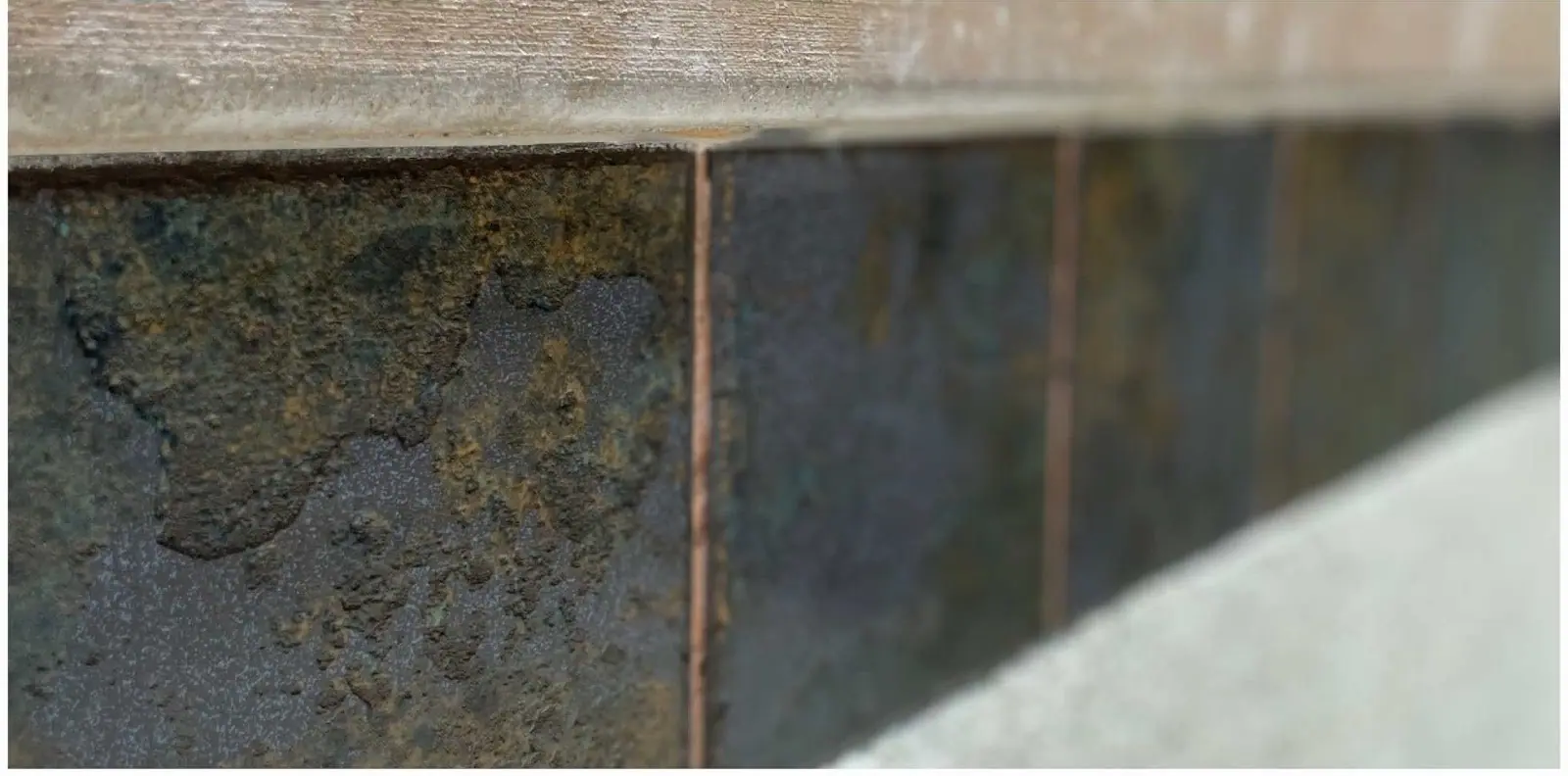
The easiest calcium to remove is the calcium that never hardens. Lunada Bay Tile says brushing the tile weekly with a soft brush or a non-abrasive pad is the key to stopping buildup at the waterline, where evaporation is highest.
Water balance decides how fast the line comes back. Orenda, a pool chemical maker, explains that the line on the tile is a form of scale left behind when water evaporates off it, and that scale forms first where the water is warmest and the pH is highest. Pooldial suggests tile cleaning every 2 to 3 years with good pH control and moderate calcium, and every year when calcium is high (400 ppm and up) and the pH runs high.
In the High Desert, a cover makes the biggest difference, because less evaporation means less new water and fewer new minerals. This post explains why pools around Apple Valley build calcium so fast and what slows it down.
Getting a price in the High Desert and Inland Empire
The fastest way to a price is a few photos. Text a wide shot of the pool and a close-up of the tile line to (760) 885-4462, or call. Say roughly how big the pool is, whether there is a spa or a raised wall, and when you need it done. We’ll set up a free estimate, look at the calcium and the tile, and tell you what it will take.
Revive is based in Apple Valley and cleans pool tile across the High Desert, in Victorville, Hesperia and Adelanto, and across San Bernardino, Redlands, Fontana, Rancho Cucamonga and the rest of the Inland Empire. Most home pools are done in a few hours, with the water lowered about 6 inches.
See pool tile cleaning for how the work is done and photos of pools we’ve cleaned.
Questions people ask
Do I have to drain the pool for tile cleaning?
No. For most pool tile cleaning the water only needs to come down about 6 inches below the tile. A full drain is only needed for an acid wash.
How long does pool tile cleaning take?
Most home pools take a few hours, depending on the size of the pool and how heavy the calcium is.
Does a spa change the price?
It can. A spa or raised wall adds tile and time, so mention it when you ask for a price.
How often does pool tile need cleaning?
It depends on the water. Pooldial suggests every 2 to 3 years with good pH control and moderate calcium, and every year when calcium and pH run high.